
Making Chain Mail
31st Jul 2014
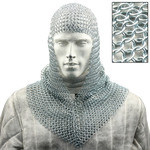
Stroll through any museum collection of medieval armor, and you can’t help but be impressed by the craftsmanship and workmanship. From splendidly designed sheets of custom-made iron protection to thick shields with spikes for attacking or blocking to the various models of swords, it’s clear that everything a knight wore and used was meant to be both functional and durable. The fact that many pieces have survived for centuries attests to a design meant to endure for ages.
Perhaps more impressive than any other class of armor are those items made of chain mail – circles of armor, ranging in width from a quarter-inch or so to mere millimeters. The wonder of it all begins with trying to figure out how blacksmiths could have forged such intricate items, many of which cover half of the body or more, without any automated machinery. It was one thing to connect links of chain mail; quite another to fashion a tailored suit of them.
To make a chain mail shirt, for instance, workers would have first needed to manufacture the rings themselves. This could have been no small feat, as one modern reconstruction of a chain mail shirt using ¼-inch rings required no less than 24,000 of the 16-guage circles.
Then, the rings would need to be tied together using a standard technique. The process would have been a matter of leaving a slight opening in the ring which would facilitate interlocking with other rings. Once set in place, the rings would need to be closed using a tool such as a modern pair of pliers. The interlocking pattern would be important to get right, for the sake of the material’s integrity. Chain mail, after all, was intended to protect a knight when in battle. And like all chains, the mail would have been only as strong as its weakest link.
From there, it would have become a matter of following a pattern that would result in various shirt “pieces” being ultimately ready to become connected and secure.
Rings would have been removed or added to adjust the fit for the specific knight. And inlays of colored rings could have also been used to design a crest or symbol to adorn the knight’s chest.
The item could have taken months or even years to complete. As with all armor, though, it would have been forged and crafted to last forever.